Addressing Coercive Control in Queensland: A Tailored Approach for Diverse Communities
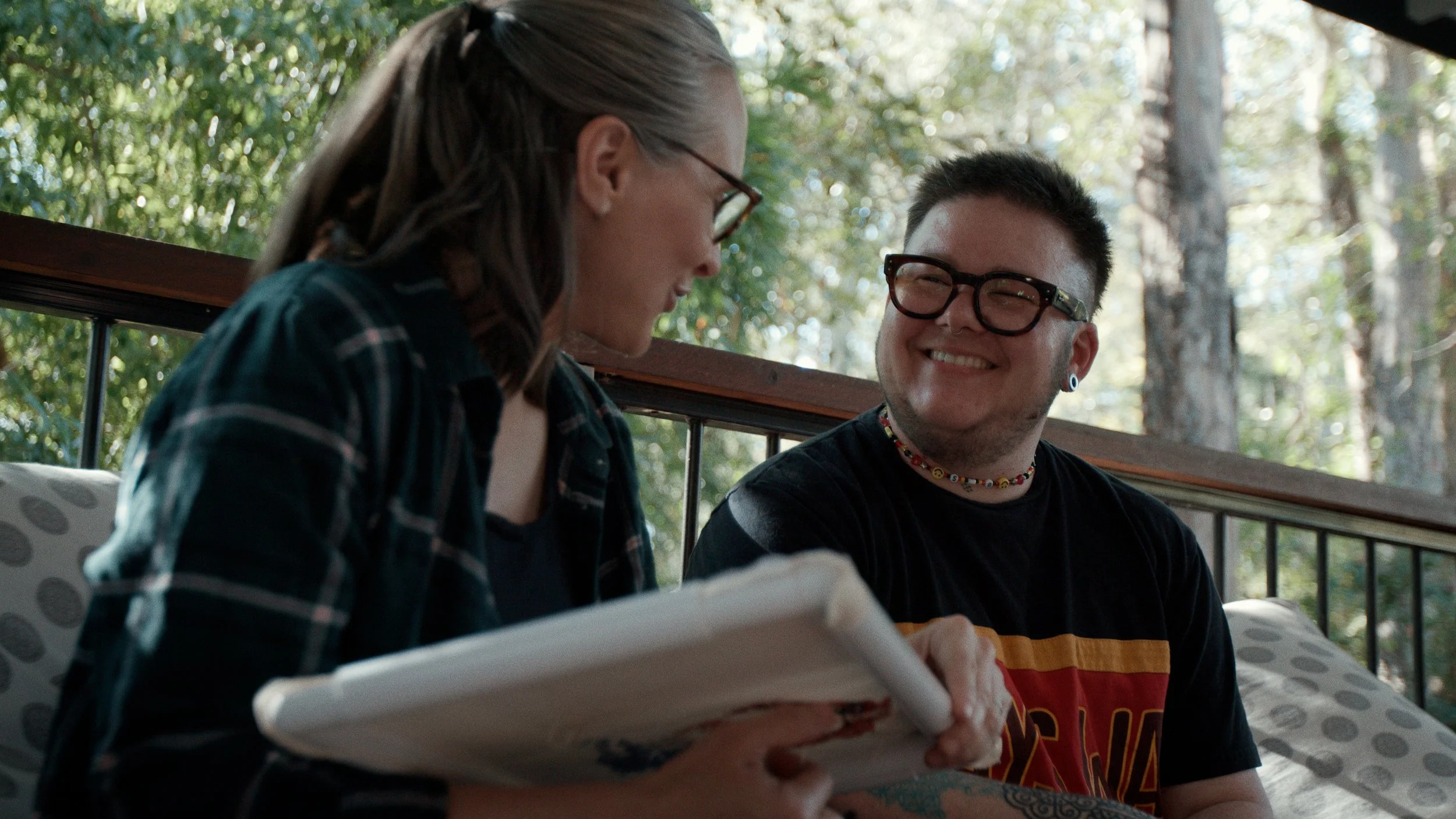
This project developed culturally safe and accessible awareness resources to address new coercive control laws. The projects' audiences represented a diverse range of communities, requiring multilingual, Auslan, and other communication methods to support engagement with the content.
About the project
The Queensland Government embarked on an initiative to tackle domestic and family violence (DFV) and the then-new criminal offence of coercive control. The project focused on developing culturally safe and accessible information for the state's diverse communities. This effort, mandated by the Women's Safety and Justice Taskforce's ‘Hear Her Voice’ Report, involved an extensive consultation process to inform the creation of new public awareness resources.
Coercive control is defined as a pattern of abusive behaviours used over time to manipulate, isolate, frighten, or threaten an individual to control or dominate them. This violence disproportionately impacts women and their children, but it affects anyone regardless of age, gender, sexual orientation, ethnicity, or ability.
Research has consistently shown that for specific cohorts, including Aboriginal and Torres Strait Islander Peoples, culturally and linguistically diverse (CALD) communities, people with disability, and the LGBTIQA+ community, there are unique barriers and lower levels of public awareness. These findings highlighted the urgent need for tailored educational resources for optimal impact.
The challenge
One of the main challenges in developing the awareness resources was translating the legal definition of coercive control into language and formats that resonate with Queensland's diverse communities, especially since the term "Coercive Control" is often misunderstood or lacks a direct translation in non-English-speaking and traditional-language groups. Focus groups highlighted issues with terminology, with participants favouring more descriptive, locally understood phrases like "Stand Over," "Toxico," and "Mind control," as well as terms that focus on manipulation, intimidation, or threatening behaviour.
The resources and materials produced needed to be trauma-informed, culturally safe, and relevant. Through a community-led approach, it was determined that a high priority was to ensure that the scenarios and messaging reflected real-life situations. Additionally, accessibility, particularly for people living with disabilities, was a priority for this community. An explicit request that the materials be produced to high accessibility standards to ensure easy access was tabled and addressed. This included incorporating assistive technologies such as Easy Read documents, Social Stories, audio clips, and Auslan interpretation. A key aspect for the LGBTQIA+ community was raised around specific abuse dynamics, such as threats of sharing a partner's sexual identity or private information without consent.
Through a series of community-led, trauma-informed activities tailored to specific groups, the key challenges and solutions were identified. This work produced high-quality qualitative insights and perspectives that laid the foundation for designing the resource material.
The solution
Our recommendation was to adopt a multi-platform co-design approach that foregrounded cultural relevance and accessibility for each specific cohort. The recommended resources included videos and animations, such as an instructional video explaining coercive control and the new laws, as well as culturally appropriate and safe materials tailored for Aboriginal and Torres Strait Islander communities.
The communities involved all emphasised that a genuine, real-world approach to the content's look and feel, reflecting the diversity within each target group, would be an effective communication strategy. They also highlighted that the resources needed to be translated into eight key CALD languages (Vietnamese, Japanese, Spanish, Hindi, Mandarin, Arabic, Thai, and Korean), as well as two Aboriginal and Torres Strait Islander languages (Wik Mungkan and Yumplatok).
The print resources were designed to operate within a framework of informal formats, including a brochure-style template with specific designs for each culture and group, as well as posters and postcards with a ‘call-to-action’ to visit the project website and support services. The accessibility resources, such as social stories and easy-read PDFs with clear images and simple sentences, as well as a suite of Auslan-interpreted materials, were also included in the delivery package. Finally, digital engagement through social media tiles and short videos, specifically aimed at platforms popular with youth and diverse communities, completed the set of outputs proposed as the delivery solution.
Through this community-led approach, insights were gathered to ensure the campaign's messaging was clear, its language was relevant, and it was communicated through suitable channels and voices. The range of outcomes directly targeted the key communities and addressed gaps in awareness and understanding of coercive control within them.
Using a tailored, co-designed approach, the suite of communication materials and campaign resources equipped the target groups with the tools and knowledge to recognise coercive control, understand the new laws, and know where to seek support.
The results
Project services: engagement, communication, research-and-evaluation